

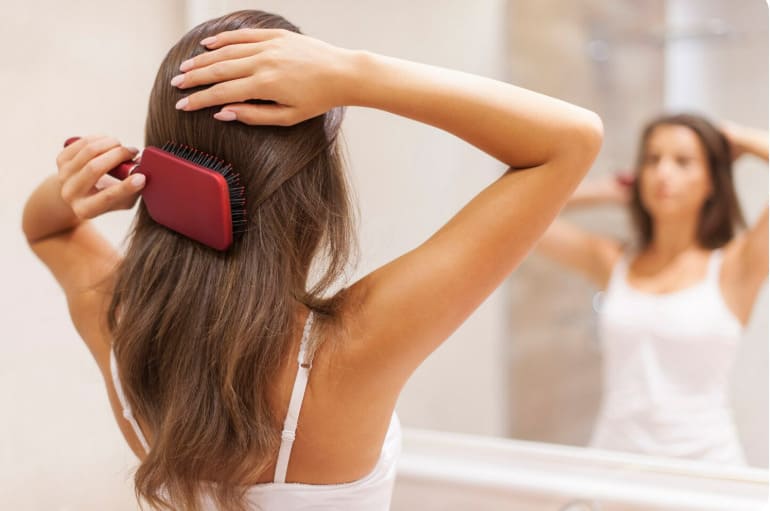
Every good day starts with good-looking hair. But if you wake up in the morning, wash your hair, and by evening you already feel it's flat, greasy, and heavy, you're probably dealing with excess sebum on your hair.
It's a common problem, especially for people with sensitive scalps or intense hormonal activity, and it's not related to hygiene, but to how the scalp reacts to internal and external factors.
Understanding why your hair gets oily is the first step to finding the right solutions.
Sebum, in fact, is not your enemy. It's a natural substance secreted by the sebaceous glands, whose role is to protect the scalp and hair strands.
The problem arises when these glands produce too much sebum, and the balance is disrupted. The result? Hair becomes shiny at the roots, heavy, and the hairstyle doesn't last even a few hours.
The causes can be diverse. Stress, hormonal changes, a diet rich in fats, too frequent washing, or using unsuitable products can stimulate sebum production. Sometimes, even small gestures, such as touching your hair with dirty hands or excessive brushing, can worsen the problem.
Another important aspect is hair type. People with straight and fine hair more often experience oily hair, because sebum distributes faster along the hair shaft. In contrast, curly or wavy hair usually has a drier scalp, as natural oils don't reach the ends as easily.
Many believe that if they wash their hair more often, the problem will disappear. In reality, frequent washing can aggravate the situation. Every time the scalp is aggressively cleansed, the sebaceous glands "understand" that they need to produce even more sebum to compensate for dryness. It's a vicious cycle that's hard to break, but not impossible.
To control excess sebum, it's important to choose gentle products suited to your scalp type. A shampoo for oily scalp should cleanse gently, without drying the skin.
The best formulas are those that contain natural ingredients, such as nettle extract, rosemary, tea tree, or green clay, known for their purifying and balancing properties.
Additionally, it's good to avoid conditioners applied directly to the roots and not to use excessive styling products. Also, hot water can stimulate the sebaceous glands, so it's recommended to wash your hair with lukewarm water.
The scalp also benefits from a little pampering now and then. Natural masks can be a valuable aid. A simple mixture of clay and water can absorb sebum, and a gentle massage stimulates circulation, helping the scalp breathe.
There are also traditional remedies for oily hair, for example, rinsing hair with diluted apple cider vinegar, which regulates pH and provides natural shine.
Before buying a new product, read the label. Avoid formulas containing heavy silicones, mineral oils, or excessive alcohol. These can suffocate the scalp and exacerbate the problem. Choose products that promise balance, not "aggressive cleansing."
Oily hair remedies and effective treatments for a balanced scalp
There are numerous treatments for oily hair, but success depends on how well you know your scalp. Everyone has their own balance, and what works for one person might be too gentle or too strong for another.
An effective treatment for oily hair begins with a simple but consistent care routine. First, wash your hair two to three times a week, using a suitable shampoo for oily scalp. Apply the product with a gentle massage, using your fingertips, without scratching the scalp. Let the lather act for a few seconds, then rinse thoroughly.
You can incorporate a purifying mask once a week, based on clay or plant extracts. These absorb excess sebum and restore a feeling of freshness. In addition, a final rinse with cold water helps to close the pores and regulate sebum secretion.
If you've noticed that your roots get greasy very quickly, while the ends remain dry, it might be an imbalance between the scalp and the hair shaft. In this case, apply conditioner only from the mid-lengths down. This way, you'll hydrate the ends without weighing down the roots.
Among the remedies for oily hair is also changing daily habits. Avoid playing with your hair too often, as hands transfer oils and impurities. Change your pillowcase frequently, as sebum and dust can be factors that keep the scalp oily.
Also, a balanced diet, rich in vegetables, fruits, and water, helps maintain scalp health from within.
However, if the problem persists, you can try an oily hair treatment recommended by a dermatologist. Sometimes, the cause can be a slight hormonal imbalance or an imbalance of the scalp flora. In these cases, professional solutions may include dermocosmetic shampoos, tonics, or natural treatments adapted to your needs.
Although it can be frustrating to deal with oily hair, the good news is that the problem can be kept under control.
With patience, suitable products, and a balanced routine, your hair can become light, clean, and full of vitality again. Don't rush to change shampoo every time you don't see immediate results; the scalp needs time to adapt.
Another useful tip is to avoid drying your hair with hot air. Heat stimulates the sebaceous glands, and the scalp reacts by secreting even more sebum. Let your hair air dry naturally or use a low heat setting on the hairdryer.
Additionally, excessive brushing can spread sebum along the entire hair shaft. Use a wide-tooth comb and clean it frequently.
You can also complement your routine with a light tonic lotion for the scalp, with a calming and purifying effect. These products are becoming increasingly popular, as they help regulate sebum secretion without irritating the skin.
Finally, remember that beautiful hair means not only a clean scalp but also a general sense of well-being. Stress and lack of sleep can affect the body's natural balance and, implicitly, hair health. Therefore, sometimes the best solution is to take care of yourself as a whole, relax, get enough sleep, and treat yourself to moments of indulgence.
It may seem surprising, but a small act of self-care, such as choosing a new hair product, a delicate brush, or a soothing treatment, can become a gift to yourself.
And speaking of beautiful gestures, when you're looking for gift ideas for Mom on her birthday, you can draw inspiration from this desire for care. A hair care set, a natural lotion, or a nourishing mask can be wonderful gifts that convey the same message: "you deserve to feel good in your own skin."
Because in the end, beauty is more than appearance. It's about how you feel every morning when you look in the mirror and smile. Because well-groomed hair is just the beginning: the rest comes from within.
If you know why your hair gets oily and adapt your routine, you'll see visible changes. The roots will stay clean longer, your hair will have more volume, and your scalp will be healthier. With each gentle wash and each correctly chosen product, you get closer to the balance you need.
The truth is that oily hair is not a problem to be ashamed of, but a sign that your scalp is telling you something. Instead of punishing it with aggressive shampoos, listen to it and provide it with proper care.
Over time, with proper treatment for oily hair, you can reach that point of balance where your hair looks clean, natural, and healthy, without daily effort. There is no universal recipe, but there is a simple rule: listen to your body, choose gentle products, and be patient.
There is also an often overlooked aspect when it comes to oily hair: the impact of the environment and daily habits. Pollution, dry indoor air, or excessive humidity can significantly influence the scalp's balance.
Dust and microparticles in the air settle on the scalp and can block pores, causing the sebaceous glands to produce more sebum. That's why even the simple act of wearing a light scarf or a hat in the city can protect your hair from external aggressions.
Another useful tip is to avoid applying styling products directly to the roots. Hairspray, mousse, or hair oils can weigh down the scalp and accentuate the appearance of dirty hair. It's best to apply them only to the lengths or ends, where the hair needs hydration and protection.
If you feel your hair needs a break, you can try a short course without aggressive products, based on natural ingredients. Allow your scalp to rebalance, and over time, you will notice that excess sebum in your hair gradually diminishes.
Ultimately, it's all about balance. A healthy scalp means beautiful hair, and self-care is reflected in every detail, even in the shine of your hair strands.
And in the meantime, don't forget that beauty means more than appearance. It's about how you feel every morning when you look in the mirror and smile. Because well-groomed hair is just the beginning: the rest comes from within.

Leave a comment
All comments are moderated before being published.
This site is protected by hCaptcha and the hCaptcha Privacy Policy and Terms of Service apply.