

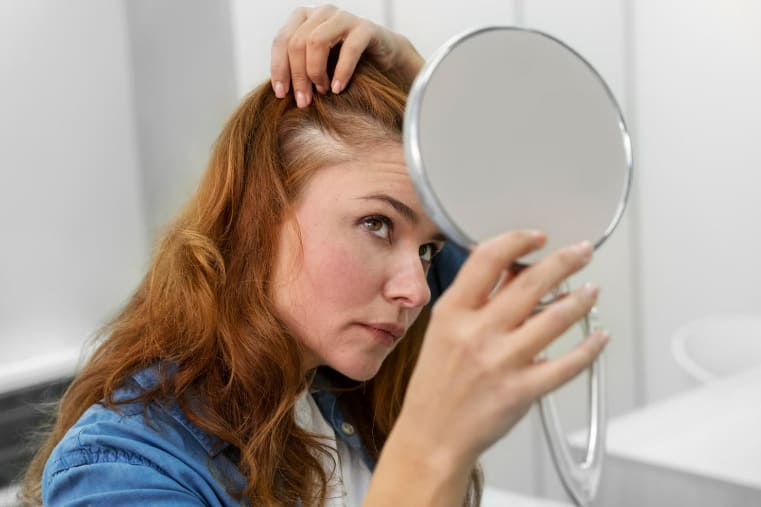
Hair has a special power. It is part of how we see ourselves and the image we present to the world. That's why, when it starts to fall out more than usual, worry naturally arises.
The phenomenon is called alopecia, and although it may sound serious, in many cases it is a reversible problem, especially if discovered early and treated correctly.
Alopecia means partial or total hair loss from the scalp or other body areas. It can appear suddenly or gradually, and the causes are numerous: from stress and hormonal changes, to genetic predispositions, skin conditions, or even daily habits that put pressure on hair strands.
There are several forms of alopecia, but the most common are alopecia areata and androgenetic alopecia.
The former manifests as round patches of hair loss, usually on the scalp, but sometimes also on eyebrows or men's beards. It is considered an autoimmune disease: essentially, the immune system mistakenly attacks hair follicles, stopping their growth.
The good news is that, in many cases, hair grows back after a period, sometimes even without treatment. However, the process can be slow and unpredictable.
Androgenetic alopecia, on the other hand, is the most common form of hair loss and is influenced by genetic and hormonal factors.
It occurs in both men and women, although it manifests differently. In men, hair gradually thins at the temples and crown, while in women, thinning is usually diffuse, affecting the entire scalp.
Some people notice the first signs of alopecia after periods of severe stress or chronic fatigue. Others, after major hormonal changes, such as pregnancy, menopause, or medication treatments.
It's important not to panic as soon as you notice hair strands in your brush or on your pillow. Losing a few dozen hairs daily is perfectly normal. It becomes alarming when you notice visibly thin areas or patches where hair no longer grows.
What many don't know is that the scalp reacts to the body's overall balance. Nutrition, sleep, stress, and even hydration influence follicle health.
If they are nourished and oxygenated correctly, hair grows beautifully and strong. If, however, they are suffocated by sebum, lack of vitamins, or constant tension in the head area, the strands become fragile and break easily.
Therefore, the first step in understanding alopecia is identifying the cause. Sometimes, a simple lifestyle change can have spectacular effects.
Other times, the help of a dermatologist or trichologist is needed, who can recommend blood tests, topical treatments, or hair growth stimulation therapies.
Alopecia treatment: modern solutions and the hope that hair can grow again
When facing a hair loss problem, the most important thing is to be patient. Hair has its own regeneration rhythm, and results do not appear overnight.
However, with an appropriate alopecia treatment and a correct care routine, you can stimulate the natural growth process and prevent the affected areas from expanding.
Treatments vary depending on the type of alopecia and its cause. In the case of alopecia areata, the doctor may recommend corticosteroid lotions, local injections, or therapies that stimulate blood circulation in the scalp.
Sometimes, substances that cause a slight local irritation are used, intended to "reactivate" dormant follicles. It is a slow process, but in many cases effective.
For androgenetic alopecia, treatments include products containing minoxidil or other substances that slow down the hair thinning process.
In addition, men can be given medications that block the action of hormones affecting the follicles. In women, treatments may include hormonal supplements or specific lotions to stimulate growth.
Besides medical solutions, there are also complementary methods that can support scalp health.
Regular massages, the application of natural oils (such as castor, argan, or rosemary oil) and a diet rich in vitamins A, B, C, D, and E can significantly contribute to regeneration. Zinc, iron, and biotin are also essential for strong hair.
Some people who have gone through this experience happily say "I got rid of alopecia," but behind this success lies patience, consistency, and constant care. Hair does not grow uniformly, and sometimes months can pass until results become visible. But every new strand that appears is proof that the body is regenerating.
An important aspect in any alopecia treatment is the emotional state. Hair loss affects not only appearance but also self-confidence. Therefore, it is essential to approach the process calmly and not blame yourself.
No one chooses to lose hair, and additional stress can only aggravate the problem. Instead, a balanced lifestyle, light exercise, and a positive attitude can support the healing process.
There are also modern therapies, such as PRP treatments (with autologous plasma), which have become increasingly popular. These use the patient's own cells to stimulate follicle regeneration.
Also, low-level laser therapy is another non-invasive method that improves circulation and offers promising results over time.
In addition, many specialists recommend careful daily care. Use gentle shampoos, free of sulfates and parabens, avoid aggressive brushing, and limit the use of heat styling tools. A healthy scalp is the fertile ground for beautiful hair.
Natural remedies should not be ignored either. Sometimes, simplicity can be key. Coconut oil, for example, has antibacterial properties and deeply nourishes the scalp.
Aloe vera soothes irritations and moisturizes the scalp, and nettle or rosemary infusions can be used as natural lotions to stimulate growth.
For those facing more severe forms of alopecia, temporary cosmetic solutions can help boost confidence. Whether it's a wig, an elegant scarf, or an adapted haircut, the important thing is to feel good about yourself. Hair is a part of you, but it doesn't define you entirely.
What matters most is not to give up. Even if the process is long, the results can be surprising. Many people who have gone through severe forms of alopecia have, over time, managed to regain their hair and confidence. Everyone's story is different, but the message remains the same: there is no loss without hope.
In some cases, alopecia can leave deep emotional scars, especially in women. Beyond physical appearance, it can affect how you see yourself in the mirror. Therefore, emotional support from family, friends, or even support groups is as important as medical treatment.
If you are at the beginning of your journey and are looking for alopecia treatment, start by consulting a specialist. Avoid miraculous solutions or products without a scientific basis. Each scalp has its own needs, and effective treatments are personalized.
Alopecia is not a sentence, but a stage. It can be difficult, but often temporary. Hair has a remarkable ability to regenerate, and the body knows how to heal if helped. It can take months or even years, but every step counts.
And when you look in the mirror and see the first new hairs, you'll know it's worth it. You might even be able to say, with joy and gratitude, "I got rid of alopecia."
Until then, take care of yourself. Eat healthy, get enough sleep, hydrate, and give your scalp everything it needs. Every moment of patience is an investment in yourself and your hair's health.
Throughout this process, it's important to remember that you are not alone. Many people experience forms of alopecia at some point, even if they don't talk about it often. Sometimes, simply learning the stories of others who have gone through similar experiences gives you the courage to move forward.
You can keep a journal to note the evolution, tried treatments, and observed changes. This way, you'll figure out what works for you and you'll see, over time, small but real progress.
Also, dedicate daily moments to relaxation: a short walk, deep breathing, soothing music, or a warm bath. Stress is one of the main factors that aggravate alopecia areata and even androgenetic alopecia, so finding inner balance is part of the treatment.
If you choose to undergo alopecia treatment, don't compare yourself to others. Each body reacts differently, and the rate of hair growth depends on many factors. Believe in the process, be patient, and trust yourself.
Alopecia doesn't take away your beauty; it just teaches you to rediscover it differently. With constant care and a positive attitude, one day you'll be able to say, with a smile on your face, that you've overcome alopecia and feel stronger than ever.
Because, in the end, alopecia is not just a hair problem. It's a lesson about balance, about confidence, and about the power to start over. Hair grows, regenerates, and comes back just as we, sometimes, need to regenerate from within to shine again.

Leave a comment
All comments are moderated before being published.
This site is protected by hCaptcha and the hCaptcha Privacy Policy and Terms of Service apply.