

What does haute couture mean?

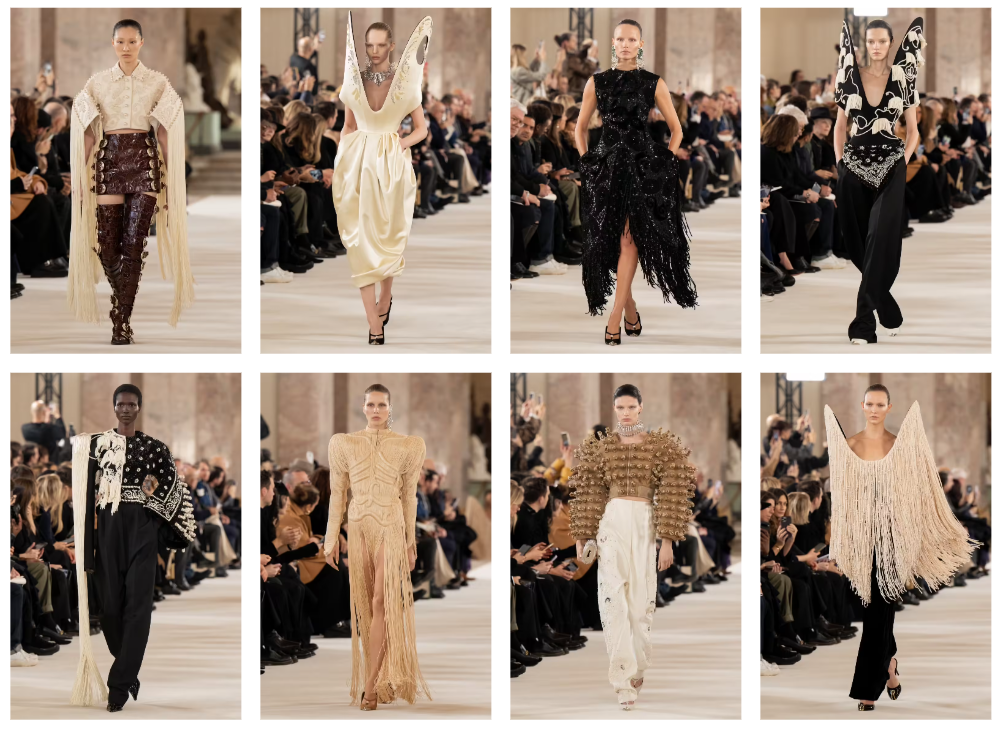
The term "haute couture", originating from the French language, literally translates as "high tailoring". This form of clothing creation represents the top of the pyramid in the world of fashion because the items are made entirely by hand, from the finest materials and with the greatest attention to detail. Moreover, they are either part of a limited collection or are unique, made to order, which makes them inaccessible to most people.
However, not every designer who meets the above conditions is a creator of haute couture pieces. The term, which appeared in 1945, is legally protected and can only be used by brands approved by the Fédération de Haute Couture et de la Mode (FHCM), a foundation established in 1868.
However, the idea of haute couture appeared even earlier, in 1858, when Charles Frederick Worth, generally considered to be the first fashion designer in the modern sense of the term, first added his name to the label of his pieces and founded the first true couture house – House Worth – in Paris.
We want to further emphasize that a defining element of haute couture is the mastery of seams and details, which are made by the most experienced and capable tailors. The great precision of these masters and the design itself determines the obtaining of pieces of impeccable quality and stunning aesthetics. At the same time, the uniqueness of the pieces attracts customers who are looking not only for clothes, but also for an unparalleled experience in terms of luxury and style.
Each haute couture collection is an expression of the designer's creative vision and his and his team's ability to transform materials into wearable works of art. It is a field where fashion becomes a means of self-expression and identity definition, both for the creators and for those who wear these creations.
What is the purpose of haute couture style?

With the advent of "pret-a-porter" ("ready-to-wear") clothing, that is, mass-produced clothing ready to be bought and worn by consumers, the relevance of haute couture diminished further.
The exacting requirements and labor-intensive practices (a Giambattista Valli dress can take around 240 hours of labor and 6,000 meters of fabric to create) make the style inaccessible to anyone outside the target audience of 0.001%.
Therefore, to ensure that there is a next generation of couture customers, FHCM pays close attention to societal trends, technological advances, digital platforms and their links to fashion and creativity. "In a troubled world like ours, it's very important that our audiences rely on reference points they believe in, pillars they can rely on, institutions capable of building bridges between heritage and contemporary and anticipating the future. This is how FHCM sees its role," explains FHCM Executive President Pascal Morand.
Therefore, under the guidance of the Federation, haute couture remains a symbol of what can be achieved by the industry's leading designers and artisans, an artistic expression, but also a source of inspiration for ready-to-wear clothing collections.
The most famous haute couture designers

The federation has approximately 100 members and comprises three central bodies (Haute Couture, Women's Fashion and Men's Fashion). Fashion houses approved to enter the federation can receive support in strategy, communication, marketing, technology, economy, culture and even political involvement.
Among the members of the Federation are big names such as:
Chanel: Founded by Gabrielle "Coco" Chanel in 1909, the fashion house is one of the most famous in the world. Defined by its elegant and sophisticated style, Chanel influenced the fashion world with its classic creations such as the black dress and the Chanel suit , but also the perfume Chanel No. 5.
Christian Dior : Christian Dior changed the face of the industry with the revolutionary "New Look" launched in 1947, which marked the return to femininity and luxury after the war period. Dior designs were characterized by long, loose dresses with thin waists and broad shoulders and which gave the outfit a structured and elegant shape, adding an aristocratic air.Dior also used feminine details such as ribbons, ruffles and delicate embroidery to accentuate the femininity and elegance of his creations.
Givenchy: Founded by Hubert de Givenchy in 1952, the fashion house is known for its sophisticated aesthetic and collaborations with stars such as Audrey Hepburn. Givenchy designers are masters of manipulating proportions and silhouettes, so some creations include interesting juxtapositions between oversized elements and delicate details, adding a touch of drama to the outfits.
Jean Paul Gaultier: The Gaultier fashion house is recognized for its innovative designs that include corsets inspired by underwear, prints with references to punk culture or references to art and fashion history. Gaultier always brings a fresh and provocative air to the world of fashion, being also known for the fact that he always brought models from all continents and of all ages to the fashion catwalks, thus reflecting the diversity of the real world.
Schiaparelli: Founded by Elsa Schiaparelli in the 1920s, the Schiaparelli fashion house is known for its innovation and avant-garde design. Elsa Schiaparelli was a pioneer in fashion, collaborating with artists such as Salvador Dalí and introducing elements of art and surrealism into her creations.
Versace: Founded by Gianni Versace in 1978, the fashion house is known for its bold and distinctive prints, such as the Medusa logo, baroque motifs, snakeskin prints and Greek motifs. In addition to these, Versace is distinguished by cuts that emphasize the waistline, deep necklines and bold slits. These cuts are meant to inspire confidence and celebrate a woman's natural beauty.
Armani: Founded by Giorgio Armani in 1975, the Armani fashion house is famous for redefining men's fashion by introducing a more relaxed and comfortable style. Armani brand clothes are characterized by neutral colors, luxurious fabrics and cuts that allow the body to move freely. Armani's success story is one of innovation and entrepreneurship as he built his empire by introducing new styles and expanding into new markets.
Valentino: Founded by Valentino Garavani in 1960, the Valentino fashion house is famous for its exquisite red dresses. Valentino's creations are characterized by their romantic and feminine style, accentuated by delicate embroideries, lace appliqués, fine pleats and artisan finishes.
In conclusion, haute couture is more than just a form of fashion creation; it is a symbol of luxury, craftsmanship and exclusivity. For fashionistas and those who appreciate beauty and sophistication, haute couture represents the pinnacle of excellence in the world of fashion. It's a fascinating universe that continues to inspire and fascinate, proving that fashion is, indeed, an art form.

Leave a comment
All comments are moderated before being published.
This site is protected by hCaptcha and the hCaptcha Privacy Policy and Terms of Service apply.