

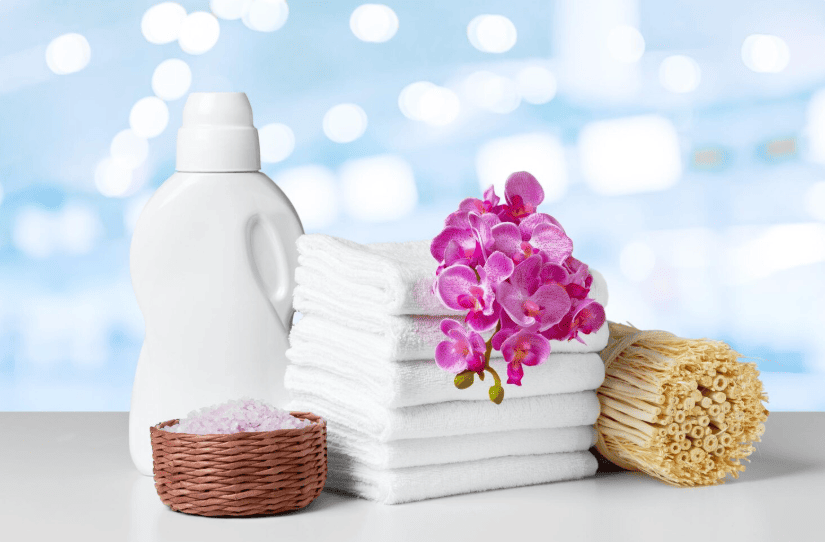
Anyone who has ever owned white T-shirts that, over time, turned a yellowish hue, shirts with persistent underarm stains, or towels that seem grey no matter how often they are washed knows the struggle. Deodorant stains, sweat, hard water, and improper washing will change the appearance of light-colored clothes over time.
The good news is that there are effective solutions, and the correct use of bleach and a few simple washing habits will help you a lot in this regard. Here's what you need to know to keep your white clothes looking neat for longer.
What is bleach and what does it contain?
Bleach is a chemical product designed to remove stains and restore the bright appearance of clothes, especially white ones. It has been used for decades in textile care and remains one of the most effective solutions for combating yellowing, persistent stains, and the dull appearance of fabrics. Its function is based on chemical reactions that break down or decolorize the substances responsible for stains.
Essentially, bleach does not "wash" dirt in the classical sense, but rather alters the chemical structure of colored compounds. Many stains are visible because certain molecules absorb light in a specific way. Bleach changes these molecules so that they no longer reflect the original color, and the stain becomes less visible or disappears.
There are two main categories of laundry bleach, differentiated by their composition and mode of action.
Chlorine-based bleach for white laundry
The first category is chlorine-based bleach. The main active substance is usually sodium hypochlorite. It has high disinfecting and whitening power. It is effective against organic stains, bacteria, and odors. Precisely because of its strength, it must be used with care, as it can weaken textile fibers and damage sensitive materials.
Oxygen-based bleach for white laundry
The second category is oxygen-based bleach. This often contains sodium percarbonate or hydrogen peroxide. In contact with water, it releases active oxygen that helps to "lift stains." It is gentler on fabrics and colors and is preferred for frequent use or for delicate clothes.
In addition to active substances, bleaches may also contain stabilizers, pH control agents, fragrances, or additives that improve washing performance. The exact formula differs from one product to another.
How to use bleach correctly for white clothes?
The correct use of bleach for white clothes involves a few simple but important rules. Applied properly, it can restore brightness to clothes and remove difficult stains; used incorrectly, it can weaken fibers and leave unwanted marks. First and foremost, check the garment's label to see if the material allows the use of bleach. Cotton and most durable synthetic fibers tolerate bleaching treatments better, while wool, silk, or elastane can be damaged.
Chlorine bleach must be diluted before coming into contact with clothes. In the washing machine, it is added to the special bleach compartment, not directly onto the laundry. The machine will release it at the appropriate time in the wash cycle. If washing by hand, dilute it in water according to the instructions on the packaging, then immerse the clothes in the solution for a limited time.
Oxygen-based bleach can be added directly to the drum, along with the detergent, or used for soaking before washing. Soaking is useful for very yellowed or stained clothes, usually for 30 minutes to several hours, depending on the product. Observing the correct dosage is essential. A larger quantity does not increase efficiency but increases the risk of damage. After using bleach, thorough rinsing helps remove residues and protect fabrics.
Tips for cleaning yellowed pajamas
Pajamas can yellow over time due to sweat, contact with skin, detergent residues, or washing at inappropriate temperatures. To restore their clean appearance, it is useful to target the causes.
An effective first step is pre-soaking. Pajamas can be left for 1-2 hours in lukewarm water with liquid detergent or oxygen-based bleach, which helps to lift stains and refresh the color. For white cotton, washing at 40–60°C, depending on what theclothing label says, helps remove residues.
Correct detergent dosage matters a lot; excess can leave deposits that accentuate yellowing. Also, extra rinsing is useful for complete removal of washing products. Air drying, preferably in natural light, can help maintain whiteness. Regular washing, without leaving dirty pajamas in the basket for too long, prevents stains from setting and keeps the material in good condition for longer.
Tips for cleaning yellow underarm stains
Yellow underarm stains appear due to the combination of sweat and deodorant ingredients, especially aluminum salts. Over time, these deposits penetrate the fibers and become visible, especially on light-colored clothes. Removing them is easier if you intervene as quickly as possible.
An effective step is pre-treatment. Apply liquid laundry detergent directly to the stain or a paste made from detergent and a little water, then gently rub the fabric and let it act for 15–30 minutes. For persistent stains, soaking in lukewarm water with oxygen-based bleach helps break down residues.
Then wash the garment at the maximum temperature allowed by the label. Avoid drying at high temperatures if the stain has not completely disappeared, as heat can set it. Repeating the treatment may be necessary. In the long term, correct deodorant dosage and choosing formulas that leave fewer residues will reduce the appearance of stains.
Tips for whitening lace

Lace is a delicate material with fine fibers and a sensitive structure, which requires increased attention during cleaning and whitening. Over time, it can acquire a yellowish hue due to dust, sweat, or improper storage. Gentle methods are best suited to restore its bright appearance.
Start by soaking in lukewarm, not hot, water with a delicate detergent for fine laundry. Leave the lace for 20–30 minutes, without aggressive rubbing. For whitening, an oxygen-based bleach, in a small amount, is preferred, as it is gentler on fibers than chlorine-based bleach.
Washing is done by hand, with gentle pressing movements in the water. Rinsing must be thorough to remove residues. Do not twist the material; gently press it in a towel to remove excess water. Drying is done on a flat surface, away from strong sunlight. Storing in dry and airy places helps prevent yellowing.
Tips for removing sweat stains
Sweat stains can appear on any type of clothing and become more visible in the underarm area, on the collar, or on the back. They are caused by the combination of sweat, bacteria, and products applied to the skin. If not treated in time, they can penetrate deep into the fibers and leave persistent marks.
An effective first step is pre-treatment. Apply liquid detergent directly to the affected area and gently massage the fabric, then let it act for 15–30 minutes. For older stains, soaking in lukewarm water with detergent or oxygen-based bleach helps to break down residues.
Wash clothes at the maximum temperature allowed by the label, as moderate heat helps to dissolve deposits. Check the area before drying; if the stain persists, repeat the treatment. Drying at high temperatures can set the stain. Washing clothes after each wear and choosing materials that allow the skin to breathe contributes to preventing these stains.
Natural methods and solutions for whitening clothes
Several common household ingredients can help refresh white clothes and reduce yellowish hues. These natural solutions do not have the chemical strength of classic bleaches, but they can be useful for maintenance, for light stains, or for people who prefer gentler fabric options. However, we recommend testing first on a small area of the material.
Whitening with hydrogen peroxide
Hydrogen peroxide (3%) has oxidizing properties that help break down stains and refresh whiteness. In contact with water, it releases active oxygen, which helps fade yellowing.
For use, a solution can be prepared from one part hydrogen peroxide and several parts water (for example, one cup to approximately one liter of water). Clothes are left to soak for about 30–60 minutes, then rinsed well and washed normally.
Whitening with baking soda
Baking soda is known for its cleaning and odor-neutralizing properties. In water, it creates a slightly alkaline environment that can help dislodge residues responsible for yellowing. Several tablespoons of baking soda can be dissolved in a bowl of warm water, enough to cover the clothes. Textiles are left to soak for a few hours, then washed as usual.
Whitening with salt
Salt is traditionally used in textile care to refresh colors and reduce odors. For white clothes, it can help clean light deposits. Several tablespoons of salt are dissolved in warm water, and the clothes are left to soak for a few hours. After that, they are rinsed and washed normally. The whitening effect is rather moderate, suitable for maintenance.
Whitening with lemon juice
Lemon juice contains citric acid, which can help fade stains and refresh whiteness. It is one of the oldest natural methods of laundry care. The juice of a few lemons can be mixed with water, then the clothes are left to soak for about an hour. After rinsing, drying in the sun can enhance the whitening effect, as natural light has a slight bleaching effect.
Whitening with white vinegar
White vinegar helps remove detergent deposits and minerals from water that can give clothes a dull appearance. Although it is not a bleach in the strict sense, it can restore the brightness of white. A cup of vinegar can be added to a basin of water for soaking or to the washing machine's fabric softener compartment. After rinsing, the smell completely disappears. It is suitable for many textiles, but it is not recommended for delicate or heavily colored materials, as it can (and often will) affect the shade.
These natural solutions work best for regular maintenance and light stains. For severe yellowing or old stains, specialized products are usually necessary. Used correctly, natural methods will help maintain a clean white and brighter clothes for longer.

Leave a comment
All comments are moderated before being published.
This site is protected by hCaptcha and the hCaptcha Privacy Policy and Terms of Service apply.