

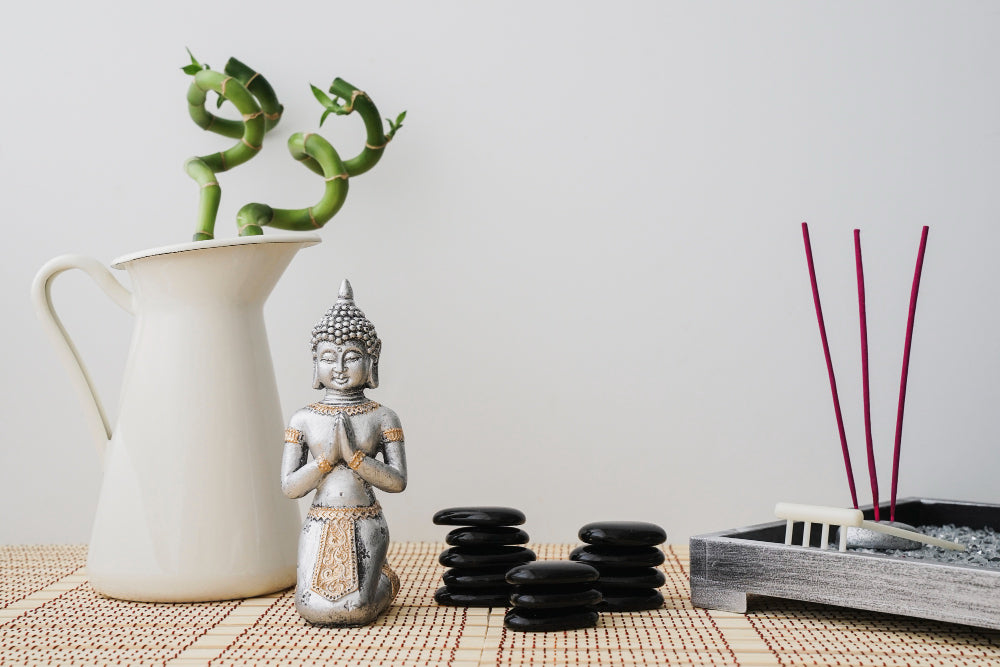
The home is the place where the soul finds peace and where every corner should inspire safety, harmony and joy. The way we choose to organize our space has a direct influence on our well-being, and this has been observed and practiced for thousands of years.
In this context, Feng Shui is an art and philosophy that helps us build a balanced environment full of positive energy.
From the position of the bed to the choice of colors in the living room, every detail can contribute to the way energy flows in a home. Feng Shui provides us with a framework through which we can look at the space with more awareness and sensitivity.
It is an opportunity to live in harmony with our home and transform it into a place that supports us every day.
The history and evolution of the art of Feng Shui
Feng Shui has its origins in ancient China, more than 3,000 years ago. The term "Feng Shui" translates to "wind and water", two fundamental elements for life and the circulation of energy in nature. In the past, the Chinese looked at the landscape and the orientation of land to build villages, temples or tombs in places considered favorable.
In the beginning, Feng Shui was used to choose the positioning of homes in relation to mountains, rivers and cardinal directions. The philosophy behind this practice was simple: man lives better when aligned with the rhythms of nature. Over time, the principles expanded and began to be applied to the interior of homes, in the organization of rooms, the choice of materials and even the colors used.
Today, Feng Shui has gone beyond the borders of Asia and is applied all over the world, both in private homes and in commercial spaces or offices. Even though it is sometimes viewed with skepticism, many people find in this art a source of inspiration to arrange their home more consciously and harmoniously.
Feng Shui Principles
Feng Shui is based on several fundamental principles that guide how energy – called "Chi" – circulates in a space.
Yin and Yang
The principle of balance between complementary energies. Yin is the quiet, cold and passive energy, and Yang is the active, bright and dynamic energy. A harmonious home is one in which these two forces coexist and complement each other.
The five elements
Fire, earth, metal, water and wood. Each has a specific energy and is represented by colors, shapes and materials. Designing a balanced home involves integrating these elements harmoniously.
Bague
It is an energy map divided into nine areas, each representing an aspect of life (career, relationships, family, health, prosperity, etc.). By relating the house to this map, we can understand how different spaces influence certain areas of life.
Chi flow
Energy needs to flow freely in your home. Objects that block movement or excessive clutter can slow down the flow and affect your well-being.
Feng Shui rules for home design
To bring Feng Shui into your home, you don't need to make radical changes. Often, small adjustments can transform the atmosphere. For example, you can do the following:
- maintain order and avoid cluttering objects, as clutter blocks energy and creates a feeling of chaos;
- let natural light enter the rooms, as light carries Yang energy and gives vitality to the space;
- choose natural materials – wood, stone, cotton, silk;
- Take into account the orientation of the furniture: the bed, desk or sofa should be positioned so that you can see the door, but without sitting directly in front of it.
Another important aspect is "energy cleaning": frequently air out rooms, remove old or damaged objects, and create bright and lively corners. These small adjustments bring a feeling of comfort, relaxation, and balance to the entire home.
Feng Shui elements in the home
Each of the five elements has an important role in the design. Their integration brings balance and energetic diversity.
Wood
It represents growth and vitality. It manifests itself through green colors and natural wood objects. Green plants are an easy way to bring the energy of wood into your home.
Fire
It is associated with passion, energy, and creativity. It is brought about by colors like red, orange, or pink, but also by candles and fireplaces.
Earth
It symbolizes stability and protection. Earthy colors – brown, beige, yellow – and ceramic objects are representative of this.
Metal
It is related to clarity and organization. It is found in the colors white, gray and gold, but also in metallic objects or round shapes.
Water
It is the fluid energy, associated with emotions and inspiration. Blue and black colors, mirrors and decorative fountains bring water into your home space.
Feng Shui rules in the bedroom
The bedroom is the space dedicated to rest and regeneration. Here, the energy should be calm and peaceful.
- position the bed so that you can see the door, but not directly in front of it;
- avoid large mirrors facing the bed – they can disturb sleep;
- use warm and relaxing colors: tones of beige, cream, pale green or light blue;
- choose underwear made from natural materials that support comfort;
- avoid electronics or bright devices.
We have a few additional recommendations:
- small plants bring extra freshness, but avoid large plants with sharp leaves;
- the paintings above the bed should inspire peace and harmony (natural landscapes, gentle shapes);
- Avoid excessive storage under the bed to let the energy circulate.
Feng Shui rules in the kitchen
The kitchen is considered the "heart of the home", the place where food is prepared and where the energy of fire is of major importance.
- the stove is the centerpiece and should be clean and functional;
- avoid placing the stove directly next to the sink – water and fire conflict (if you have no other option, a small wooden object between them can balance the energy);
- uses warm and bright colors, which stimulate appetite and conviviality.
- Keep fresh fruit on display, which brings positive energy and vitality.
For a balanced Feng Shui arrangement, the first step is to observe the position of the main elements: stove, sink and refrigerator. Ideally, the stove should not be positioned directly next to the sink, to avoid the conflict between fire and water. If there is no other option, you can place a small wooden or ceramic object between them, which will balance the energy.
The space should be clean and tidy, with free countertops to allow the flow of Chi. Natural light is important, so windows should be as visible as possible, possibly complemented by warm lights in darker areas. The colors in the kitchen can vary, but warm tones – cream, beige, orange or pale yellow – promote a feeling of conviviality and positive energy.
Decorative objects and accessories can support the energy of fire and wood: a pot of green plants, a bowl of fresh fruit or a decorative board with natural motifs can enhance vitality. In addition, it is recommended to keep drawers and cabinets in order, eliminating unnecessary objects, so that the energy can circulate freely and harmoniously throughout the room.
Feng Shui rules in the bathroom
The bathroom is a more delicate space from a Feng Shui point of view, because energy can "leak" through the water.
- keep the bathroom door closed and the toilet lid down;
- uses bright colors, which give the feeling of cleanliness and freshness;
- small green plants or wooden objects can balance the energy of water;
- Mirrors should be clean and reflect light, but not placed so that they reflect the toilet.
Feng shui rules in the living room
The living room is the space where we spend time with family and friends, so the energy here needs to be open and welcoming.
- the main sofa should be positioned against a solid wall to provide safety;
- avoid placing furniture in a way that blocks the entrance or circulation;
- the colors can be more varied: from warm tones to more vivid accents, depending on the desired atmosphere;
- decorative objects, paintings and family photographs reinforce the sense of belonging;
- Mirrors can be used to visually enlarge a space, but they must be placed so that they reflect something pleasant.
Feng Shui is a philosophy that reminds us of the importance of living in harmony with our space. The house essentially becomes a "living organism," breathing through the objects, colors, and energies we house.
If we apply the principles of Feng Shui, we can transform our home into a space that inspires warmth, tranquility, a space that helps us rest better, be more creative, and, ultimately, live in balance first with ourselves, and then with this great Universe.
It's not about following every rule to the letter, but about feeling which recommendations resonate with you and carefully integrating them into your daily life.

Leave a comment
All comments are moderated before being published.
This site is protected by hCaptcha and the hCaptcha Privacy Policy and Terms of Service apply.