

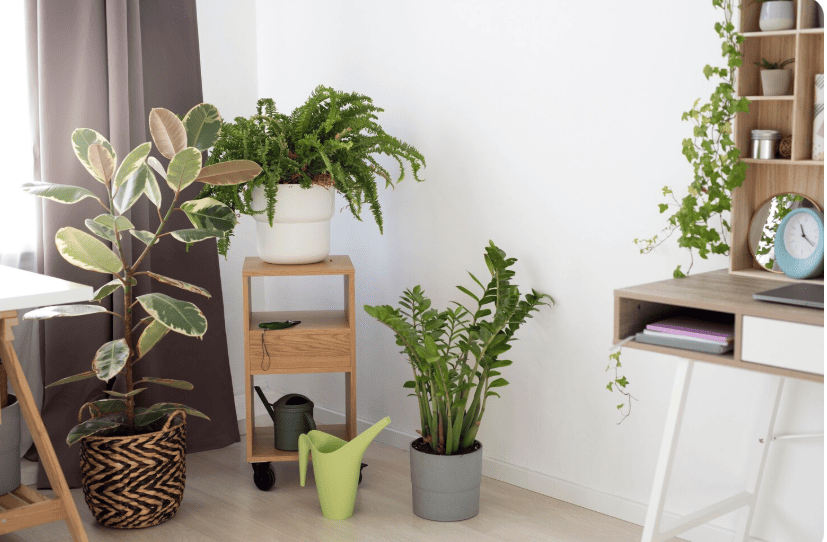
The air in the bedroom influences more than it seems at first glance. You breathe it for hours during the night, and its quality is reflected in your sleep, morning energy levels, and even your overall health. In a context where indoor pollution is becoming increasingly prevalent, houseplants play an unexpectedly useful role.
Inspired by research from NASA, certain plants can contribute to cleaner air and a more pleasant overall environment. Besides their decorative appearance, they add freshness and support a more peaceful space, suitable for rest.
How do plants actually "clean" the air?
Indoor plants do not act as a classic cleaning device, but their natural processes have a real effect on the air in the room. It all starts with photosynthesis: plants absorb carbon dioxide and release oxygen, thus contributing to fresher air, especially in enclosed spaces.
Beyond this well-known process, there is also their ability to absorb certain harmful compounds from the air. NASA studies have shown that plants can take up substances such as benzene, formaldehyde, or trichloroethylene, frequently present in paints, detergents, furniture, or building materials. These substances reach the plant's tissues and are transformed into less harmful compounds.
The root zone also plays an important role. The soil in the pot, along with the microorganisms living there, actively participates in this process. Practically, not just the upper vegetative parts, meaning the leaves, but the entire plant system "works." The larger the contact surface between the soil and the air, the more visible the effect becomes.
Besides filtering some particles, plants also contribute to a slight increase in air humidity through the process of transpiration. This can make a difference in bedrooms where the air becomes dry, especially in winter. Overall, plants that purify the air in the bedroom do not replace other dedicated solutions but complement a healthier indoor environment very well.
10 healthy bedroom plants for your lungs
Choosing the right plants for the bedroom depends on their appearance, as well as how they adapt to the space and contribute to more pleasant air. Each species has its peculiarities, and if you understand them, it will be much easier to create a green, welcoming corner that truly makes a difference in the air quality of your bedroom!
Sansevieria (Snake Plant)
It is one of the most suitable plants for the bedroom, especially due to the fact that it releases oxygen even at night. Its vertical, firm leaves have a modern look and easily integrate into any decor. It doesn't need frequent care, and overwatering is the only thing that can cause it problems. It does well even in rooms with lower light.
Areca Palm (Dypsis lutescens)
The Areca Palm brings a relaxed, almost tropical atmosphere to the bedroom. Its long, arching leaves create a sense of space and freshness. It prefers indirect light and moderate humidity, and if positioned correctly, it can become a focal point in the room. It is an inspired choice for more airy rooms and fits very well with the style proposed by Feng Shui art.
Aloe vera
Aloe vera is known for its uses in skin care, but it also fits very well in the bedroom. It has a simple, clean appearance and does not require constant attention. It prefers bright areas and does not need to be watered often. It is the kind of plant you can have without changing your daily routine.
Peace Lily (Spathiphyllum)
With its green leaves and elegant white flowers, the Peace Lily adds a touch of sophistication to any bedroom. It adapts well to indirect light and needs regular watering, without excess. It is appreciated for both its appearance and its contribution to more pleasant air in the room.
Spider Plant (Chlorophytum comosum)
If you want an easy-to-care-for plant, this is one of the most suitable choices. It grows quickly and develops shoots that can be easily replanted. It adapts to different light conditions and does not require special attention. It is also suitable for those who have no experience with houseplants.
Ficus elastica (Rubber Tree)
The Ficus impresses with its large, glossy leaves that immediately catch the eye. It is a robust plant, suitable for spacious bedrooms. It prefers indirect light and moderate watering. From time to time, the leaves can be wiped to maintain their clean and healthy appearance.
Dracaena (Happy Plant)
Dracaena is an elegant plant with slender leaves and an airy appearance. It fits well in modern bedrooms and does not require complicated care. It needs constant temperatures and careful watering, without excess. It is a good choice for those who want a decorative but easy-to-manage plant.
Epipremnum aureum (Pothos)
Pothos is a versatile plant that can be placed on shelves or allowed to trail from hanging pots. It easily adapts to different light conditions and has no complicated requirements. It is appreciated for its resilience and its pleasant appearance, with green leaves and golden streaks.
Aglaonema
Aglaonema is ideal for bedrooms with lower light. Its leaves have interesting patterns that add personality to the space. It requires moderate watering and should not be moved frequently, as it prefers stability. It is an inspired choice for a quiet and balanced decor.
Gerbera
Gerbera brings color and energy to the bedroom. Its vibrant flowers create a pleasant contrast with the rest of the decor. It prefers good light and regular watering, and if cared for properly, it can become an element that completely changes the atmosphere of the room.
Examples of humidity-absorbing plants
In some homes, especially where ventilation is not ideal, high humidity becomes a real problem. It can be felt in the air, in the room's smell, and over time, it can affect both comfort and health. In such situations, houseplants can play a discreet but useful role, helping to regulate humidity and create a more pleasant space.
Fern (Nephrolepis)
The fern is one of the plants recognized for its ability to influence air humidity levels. It absorbs moisture through its leaves and, at the same time, contributes to fresher air. It prefers slightly humid spaces, such as bathrooms or less ventilated rooms, and needs indirect light.
English Ivy (Hedera helix)
Ivy is known for its ability to absorb particles from the air and influence humidity levels. It is suitable for enclosed or cooler spaces, but it must be carefully positioned if there are pets, as it can be toxic.
Orchid
Orchids, in addition to their refined appearance, have the ability to absorb moisture from the air through their aerial roots. They are suitable for bathrooms or kitchens, where the humidity level is higher. They need good light and carefully measured watering.
Calathea
Calathea is a plant appreciated for its decorative leaves, but also for how it interacts with the environment. It prefers more humid air, but at the same time helps maintain a more stable indoor climate.
Examples of indoor plants resistant to darkness
In many homes, natural light does not reach all rooms as generously. North-facing bedrooms, hallways, or more secluded corners may seem difficult for plants. However, there are indoor plants that adapt surprisingly well to low light conditions and maintain their pleasant appearance without complicated efforts.
Zamioculcas (ZZ plant)
Zamioculcas is recognized for its ability to survive in difficult conditions. Its glossy leaves remain healthy even in rooms with low light. It requires infrequent watering and easily adapts to the indoor environment.
Epipremnum aureum (Pothos)
Pothos is one of the most versatile indoor plants. It can also grow in low light conditions, although its development is slower. It is ideal for shaded corners or for decorating shelves.
Aspidistra (Cast Iron Plant)
Also known as the "cast iron plant," aspidistra is extremely resilient. It tolerates lack of light, temperature variations, and periods of less frequent watering. It is suitable for spaces where other plants would not survive.
These plants do not need complete darkness, but they adapt very well to low light areas. Choosing them can transform even the least luminous corners of the house into lively and pleasant spaces.
Tips for decorating the bedroom with plants
Decorating the bedroom with plants aims at both aesthetics and how you create a space where you feel good, breathe easier, and truly relax. Plants bring life, but also a calmer rhythm to the room, and if chosen and positioned correctly, they will completely change the atmosphere of the bedroom!
Choose plants based on light
The first thing you should pay attention to is natural light. Not all plants feel good in the same conditions, and a bedroom can have very different areas from this point of view. If you have a bright room, you can opt for plants like aloe vera or gerbera, which prefer good light.
On the other hand, for more shaded corners, plants like Sansevieria, Zamioculcas, or Aglaonema adapt much more easily. The idea is not to force the plant to adapt, but to choose something suitable for your space.
Don't overcrowd the space!
It's easy to get excited and bring too many plants into the bedroom. However, the rest area needs air and visual clarity. Choose a few well-positioned plants that complement the decor without cluttering the room. A larger pot in a corner or two-three plants placed on nightstands or shelves, along with scented candles, will have a much more pleasant impact than a multitude of cramped pots.
Think practically about positioning
Where you place the plants matters as much as choosing them. Avoid putting them too close to the bed, especially if they are bulky or require frequent watering. You can use the windowsill, a dresser, a hanging shelf, or even the floor for larger plants. If you have a small bedroom, hanging plants or those placed on furniture allow you to save space.
Consider humidity and temperature
The bedroom is usually a more stable space in terms of temperature, but the air can become dry, especially in winter. Some plants, such as ferns or palms, prefer higher humidity, while others, such as aloe vera, do well in drier air. Avoid placing plants near radiators or in cold drafts. Sudden temperature changes can affect them more than lack of light.
Choose pots that match the room's style
Plants are, implicitly, also decorative pieces. The pots will complement the bedroom's style or, conversely, can visually unbalance it. For a minimalist bedroom, simple pots in neutral colors work well. If you like a warmer style, you can choose ceramics, natural textures, or wooden stands. The important thing is for the ensemble to appear coherent.
Create a green relaxation corner
If space allows, you can set up a small corner dedicated to plants. An armchair, a lamp with warm light, and a few plants around will transform a seemingly simple area into a place where you enjoy spending time. Even in a small bedroom, such an area can exist on a smaller scale. You don't need many elements, but a balanced composition.
Take care of them periodically
Plants retain their charm when cared for. Correct watering, dusting leaves, and periodic checking are very important. Complicated routines are not needed, but constant attention. Over time, you will learn to "read" them and understand what they need.
The air quality in your home matters more than you (don't) think!
The air quality in your home has a direct impact on how you feel every day, even if it's not always obvious. We spend many hours indoors, and the air we breathe can contain dust, chemical compounds from furniture or detergents, and even excessive humidity. All these influence breathing, sleep, and energy levels.
Often, the indoor air becomes more polluted than the outdoor air, especially in well-insulated homes where ventilation is poor. Feelings of fatigue, headaches, or respiratory discomfort can be related to this aspect. A well-ventilated environment, complemented by indoor plants or simple maintenance solutions, contributes to a more pleasant and healthier space.


Leave a comment
All comments are moderated before being published.
This site is protected by hCaptcha and the hCaptcha Privacy Policy and Terms of Service apply.