

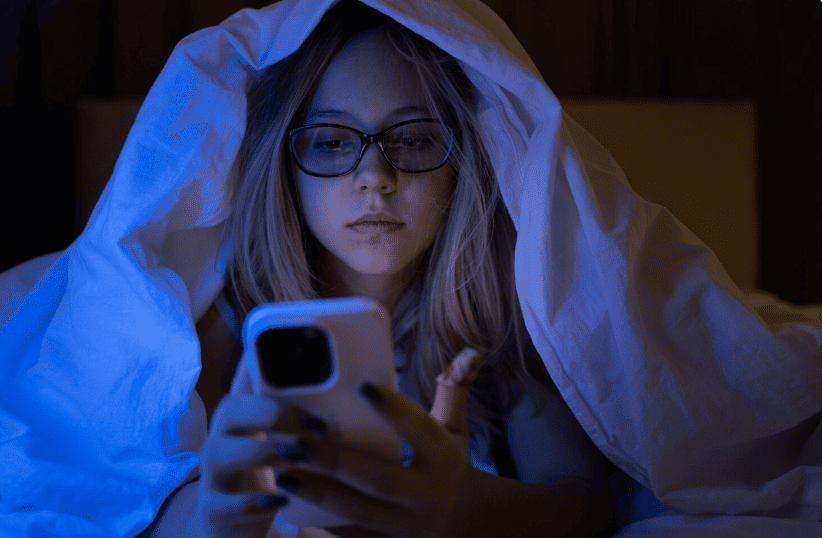
Screen exposure has, unfortunately, become a reflex, especially in the evening when the phone or television accompanies the relaxation routine. However, the blue light emitted by these devices directly influences sleep, even if the effects are not always obvious. This type of light inhibits the production of melatonin, an essential hormone for falling asleep, which can delay sleep and reduce its quality.
Over time, the seemingly harmless habit of screen time before bed can lead to fatigue, fragmented sleep, and difficulty concentrating, among other things. More will be presented in this article, which we hope you will find useful and will help you better understand the link between digital screen exposure and its negative impact on our well-being!
The Impact of Blue Light on Physical and Cognitive Health
Constant exposure to blue light, especially in the second half of the day, is not limited to simple discomfort. The effects are gradually felt, both physically and in how the brain functions. From disturbed sleep to decreased concentration, this type of light influences the body's natural rhythm more than it seems at first glance.
Disruption of Sleep and Circadian Rhythm
Blue light directly interferes with the circadian rhythm, which is the "internal clock" that tells you when to be active and when to rest. In the evening, screen exposure sends signals to the brain similar to those received during the day. Thus, melatonin secretion is delayed, and falling asleep becomes more difficult. Over time, sleep becomes shallower and more fragmented.
Eye Strain and Visual Discomfort
Prolonged screen viewing leads to eye strain. Blinking frequency decreases, and the ocular surface dries out faster. Burning sensations, irritation, or blurred vision appear, especially after long periods spent in front of devices. This type of fatigue can also affect daily productivity.
Decreased Concentration and Cognitive Performance
Poor quality sleep quickly reflects in concentration ability. Memory, attention, and reaction time can suffer, especially when blue light exposure becomes a constant habit in the evening. Over time, this can influence both professional and daily activities.
Effects on Mood
Sleep deprivation or insufficient rest affects emotional balance. Irritability, lack of energy, or difficulty managing stress may appear. Although not immediately obvious, there is a direct link between evening screen exposure and mood fluctuations.
Possible Long-Term Effects
Although research is still ongoing, there are indications that prolonged exposure to blue light may contribute to oxidative stress in the eyes. In parallel, repeated sleep disturbances can impact metabolism and the immune system. For this reason, managing exposure becomes an important aspect of daily routine.
Melatonin and Screens: A Relationship Far From Being a Love Affair
Melatonin is the hormone that prepares your body for sleep. It is naturally secreted in the evening as light decreases, telling the body it's time to slow down. In an ideal scenario, this process unfolds smoothly, and falling asleep occurs effortlessly. In reality, screens completely change this dynamic.
How Do Screens Affect Melatonin Secretion?
The blue light emitted by phones, laptops, or televisions sends a "daylight" signal to the brain. Thus, melatonin production is delayed, and the body no longer naturally enters a state of relaxation. Even short-term exposure before bed can influence this mechanism.
Why Do You Find It Harder to Fall Asleep After Being on Your Phone?
After a few minutes spent on a screen, the brain remains in a state of alertness. Beyond the actual light of the phone, we are also talking about visual stimuli and processed information. The result is delayed sleep and a feeling of agitation, even when you are tired.
Visible Effects on Daily Routine
When melatonin is not secreted at the right time, sleep becomes shallower. Energy levels are harder to achieve in the morning, and concentration difficulties or irritability may appear during the day. This type of imbalance is not always obvious but accumulates over time.
What Are the Signs of a Disrupted Circadian Rhythm?
The circadian rhythm functions as a finely tuned internal mechanism that organizes your sleep, energy, and overall state throughout the day. When it is thrown off, the signs do not appear suddenly but gradually and can be easily ignored at first. However, the body clearly signals that something is wrong. At this point, you should adopt effective strategies for how to fall asleep faster.
Difficulty Falling Asleep
One of the first signs is the inability to fall asleep at a reasonable hour, even if you feel tired. The mind remains active, and sleep is delayed without an obvious reason.
Frequent Awakenings During the Night
Sleep becomes fragmented, with repeated awakenings or the feeling that you are not getting enough rest. Even if you sleep for a few hours, the quality of sleep is low.
Constant Daytime Fatigue
You feel lacking in energy, even after a full night's sleep. There is a need for coffee or frequent breaks, and concentration becomes difficult.
Difficulty Concentrating and Memory Problems
A disrupted rhythm directly affects cognitive functions. It becomes harder to concentrate, retain information, or complete tasks that once seemed simple.
Mood Swings
Irritability, impatience, or anxiety can appear without a clear reason. Insufficient or poor-quality sleep affects emotional balance.
Drowsiness at Inappropriate Times
You may feel the need to sleep during the day, even at times when you should be active. At the same time, in the evening, when it should be time to rest, you cannot fall asleep easily.
Imbalances in Daily Routine
Sleep hours become irregular, and the body no longer has a stable schedule. This affects both rest and appetite, digestion, and, consequently, the general energy level.
Warm Light or Cold Light in the Bedroom?
Warm light, with yellowish or slightly orange tones, creates a feeling of comfort and peace. It is similar to natural light at sunset, a moment when the body naturally begins to slow down. In the bedroom, this type of light contributes to relaxation and supports preparation for sleep, without excessively stimulating the brain. The atmosphere becomes more pleasant, more intimate, and the transition to rest is easier.
On the other hand, cold light has blue or bluish-white tones and is much more intense. It is useful in spaces where you need concentration, such as the office or kitchen, but in the bedroom, it can create discomfort, especially in the evening. This type of light stimulates alertness and can delay melatonin secretion, making falling asleep more difficult. Essentially, it sends signals to the body similar to those during the day.
For the bedroom, warm light remains the appropriate option, especially in the second half of the day. If you need brighter light, you can integrate it punctually, for example, with a reading lamp, without affecting the entire atmosphere. Ideally, as evening approaches, the intensity of the light should gradually decrease, and the tones should be as gentle as possible.
Tips and Strategies for a Digital Detox Before Bed
A digital detox before bed does not mean completely giving up technology, but rather creating a quiet space where your body can naturally prepare for sleep. Even small adjustments to your evening routine can have a visible impact on how you fall asleep and rest. Here's what we confidently recommend!
- set a clear limit and stop using screens at least 1-2 hours before bedtime;
- avoid checking your phone in bed, even for a few minutes, as it reactivates your state of alertness;
- activate "night shift" mode or blue light filters if you use devices in the evening;
- replace scrolling on your phone with quieter activities, such as reading or listening to music;
- use warm or even reddish light in the bedroom instead of cold and strong light;
- create a consistent evening routine to signal to your body that it's time to rest;
- leave your phone away from the bed or in another room if you feel tempted to use it;
- choose comfortable bed linen made from natural materials that allow your skin to breathe and help you access that welcome state of relaxation more quickly;
- avoid notifications and sounds that may interrupt you during the evening or night;
- try to set a fixed bedtime and stick to it as often as possible;
- spend time in natural light during the day to support a stable circadian rhythm.
In a world where screens are part of our daily routine, the relationship with blue light becomes increasingly important for health. There is no need for radical changes, by no means, but rather a few simple adjustments, made consciously, especially in the evening.
The way you prepare your sleep environment, from light to habits, directly influences its quality. Choose to enjoy the best possible quality sleep, just as you deserve!


Leave a comment
All comments are moderated before being published.
This site is protected by hCaptcha and the hCaptcha Privacy Policy and Terms of Service apply.